Is a foamy urine normal?
Most Malaysians love a cup of ...
Feb 18, 2022
A cataract is the clouding of the normally clear lens in the eye. Majority cases of cataracts develop slowly and do not disturb the eyesight early on. However, over time, cataracts will eventually interfere with your vision.

The lens is the clear part of the eye, along with the cornea that helps to refract light to be focused on the retina. Retina is the light-sensitive tissue lining the back of the eye. In a normal eye, light passes through the transparent lens to the retina. Once it reaches the retina, light is converted into nerve signals that travel through the optic nerve to the brain. The lens has to be clear to allow the retina to receive a sharp image. In cataract, the lens is cloudy, thus the image you see is blurred.
The lens is flexible and made of water and protein. The protein is arranged in a precise way that keeps the lens clear and allow light to pass through it. However, as we age, the lens become less flexible and less transparent. These then cause some of the protein to clump together and cloud a small area of the lens. Over time, the cataract grows larger and cloud more of the lens, distorting the light passing through the lens.
Clouded vision will not only make it harder to see, but also harder to read, drive a car (especially at night), or see another person’s face.
Cataracts usually develop in both eyes, but not evenly. One side of the eye may have a more advanced cataract than the other, resulting in vision differences in the eyes.

The signs and symptoms of cataract include:
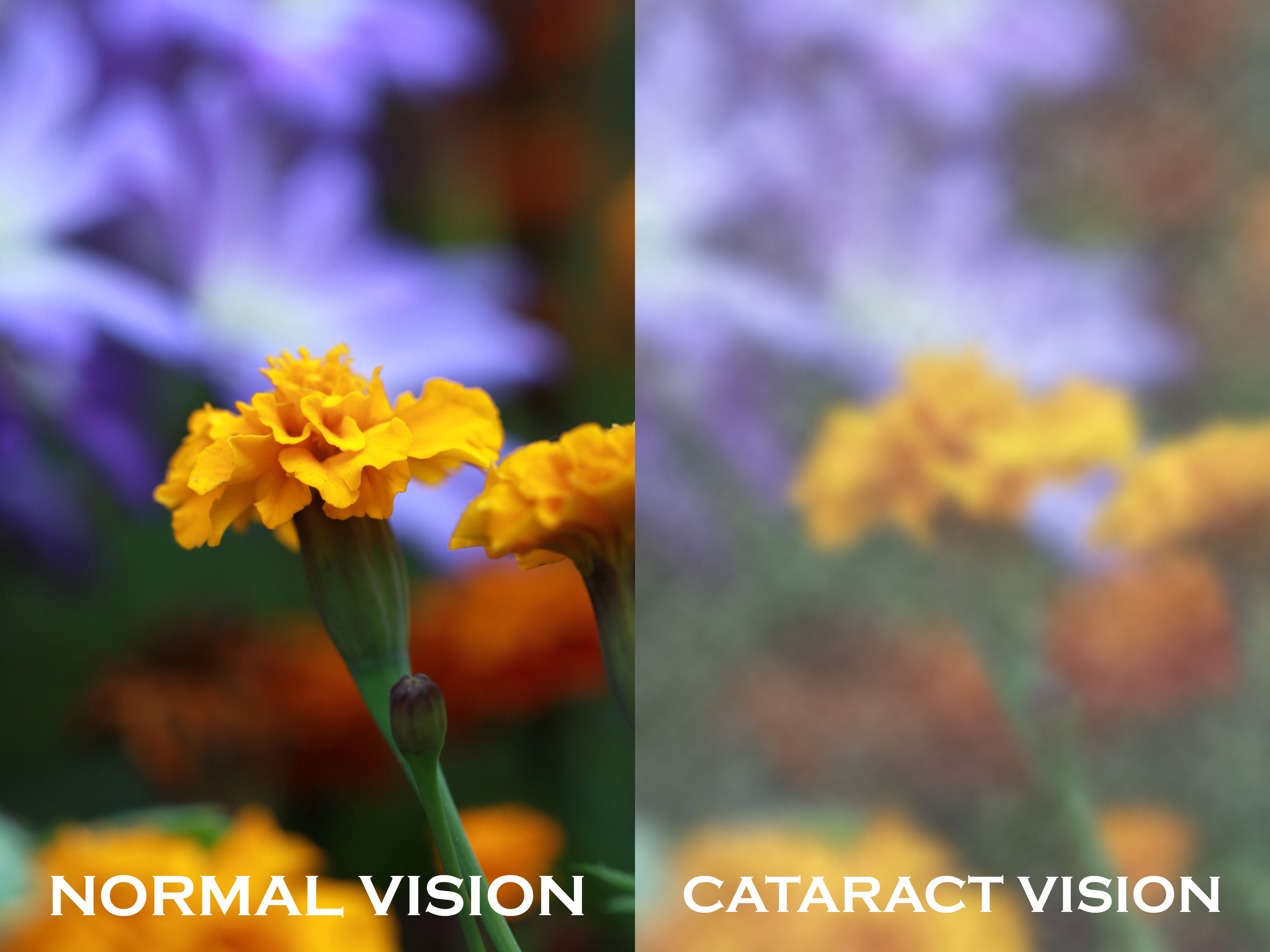
The symptoms of early cataracts can be improved with new prescription glasses, anti-glare sunglasses, brighter lighting, or using magnifying glasses. However, if these measures do not help, surgery is the only effective treatment. Most eye doctors will suggest cataract surgery (phacoemulsification and lens insertion) when your cataracts begin to affect your quality of life or interfere with your ability to perform normal daily routines, like reading or driving at night.
Phacoemulsification involves the removal of the clouded lens, followed by replacing it with a clear artificial lens (intraocular lens). The lens will be placed in the same position as your natural lens and remains as a permanent part of your eye.
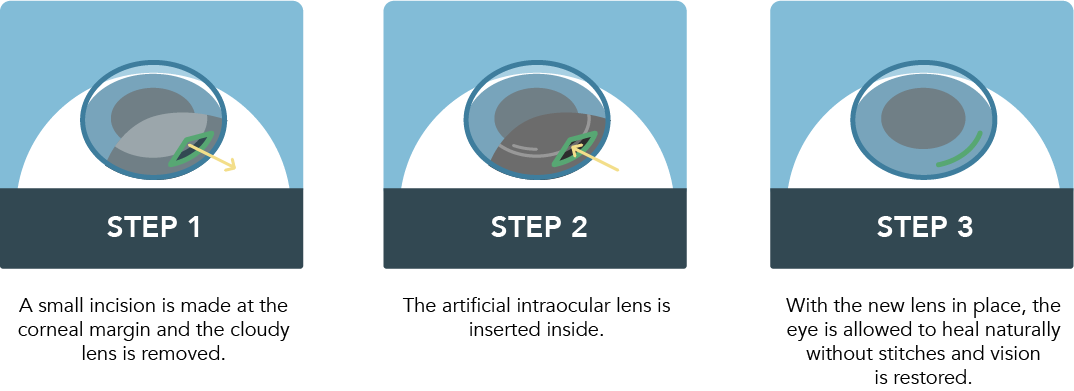
Be sure to talk to your doctor and learn about the benefits, risks, alternatives and expected results of a cataract surgery.
Although there are no studies yet to prove how to prevent or slow the progression of cataracts, there are several steps that can be help to reduce your risk factors:

Make an appointment for an eye examination if you notice any changes in your vision.
References:
Image credit:

Most Malaysians love a cup of ...

ADAKAH KITA BOLEH HAMIL KETIKA...

Image credit: Alvesgaspar,...

Do you have that pooping s...

Whether a pregnancy test t...

A toddler blinking hard or fas...